

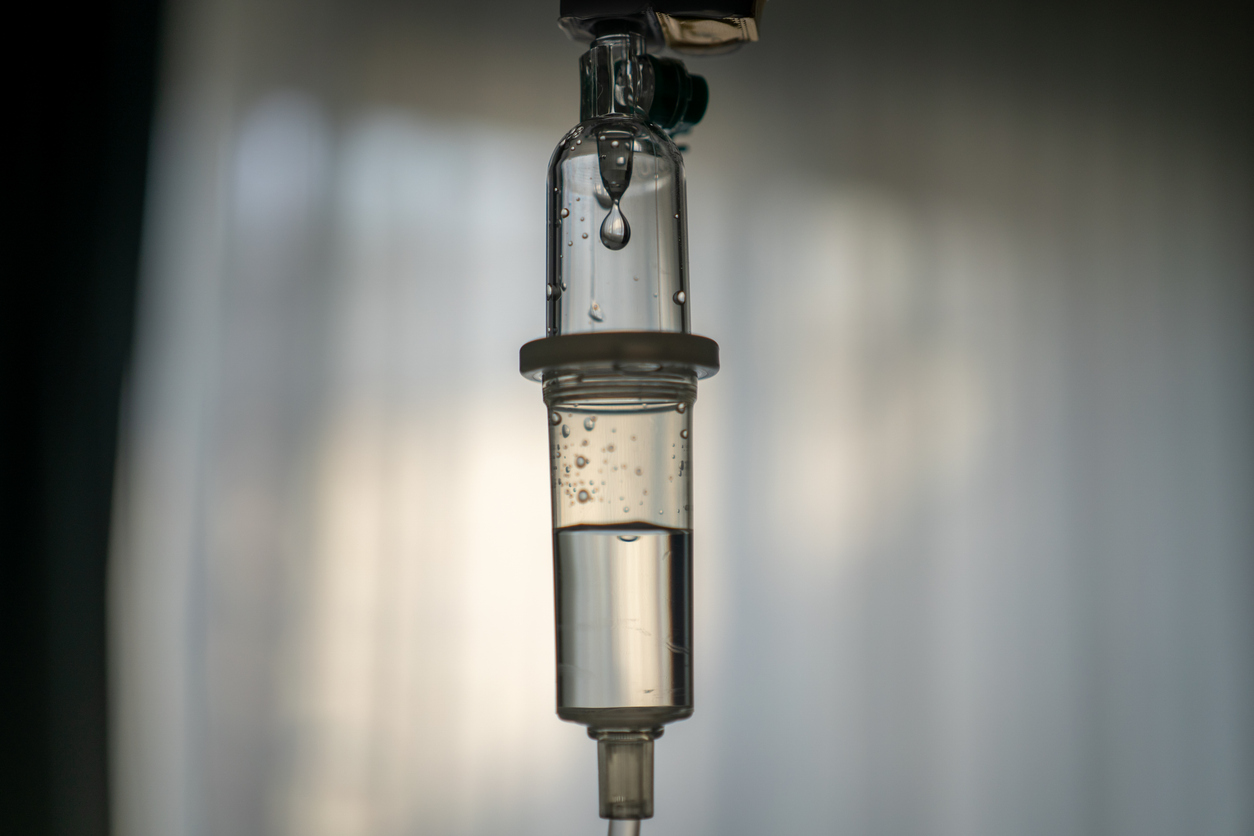
When is a patient ready to begin weaning from parenteral nutrition (PN)? The answer involves more than determining whether they are consuming enough calories. Gastrointestinal (GI) function, nutrient absorption, hydration, electrolyte balance, and overall clinical stability all play important roles.
For registered dietitian nutritionists (RDNs), determining readiness to wean PN can be complex. Patients may be recovering from surgery or serious illness, experiencing changes in gastrointestinal function, or managing chronic conditions that affect their ability to meet nutritional needs.
Before initiating a PN wean, RDNs and the interdisciplinary team should consider five important questions.
1. Why Is the Patient Still Receiving PN?
Understanding why PN was initiated and whether that indication has resolved or improved is essential.
A patient recovering from a temporary postoperative complication may be able to transition relatively quickly once GI function returns. In contrast, a patient with short bowel syndrome, severe malabsorption, or chronic intestinal failure may require a more gradual approach or ongoing parenteral support.
Clinical consideration: Starting to eat again does not necessarily mean the original indication for PN has resolved.
2. Is the GI Tract Functioning Well Enough to Meet Nutritional Needs?
Tolerating oral or enteral nutrition is not the same as absorbing sufficient nutrients.
Patients with short bowel syndrome, high output ostomies, or significant GI losses may consume adequate amounts of food without absorbing enough nutrients to meet their needs. Intestinal failure is described as the inability of the gut to absorb enough macronutrients, micronutrients, water, and electrolytes to sustain health, requiring intravenous supplementation (1).
Clinical consideration: Adequate intake does not always mean adequate absorption.
3. Can the Patient Maintain Adequate Hydration and Electrolyte Balance?
Calories and protein often receive the most attention, but PN also provides fluids and electrolytes.
As PN is reduced, patients must be able to maintain appropriate fluid and electrolyte balance through oral or enteral intake, with additional support when necessary. This can be particularly challenging for patients with high output ostomies, short bowel syndrome, or significant GI losses. For example, in high output stomas, small bowel losses can deplete water, sodium, and often magnesium (2).
Clinical consideration: Meeting calorie needs does not guarantee adequate hydration or electrolyte balance.
4. Is Oral or Enteral Intake Consistent and Sustainable?
A patient who eats well for one day may appear ready for a PN reduction. But what happens when appetite declines, GI symptoms return, or fatigue interferes with eating?
RDNs should consider whether intake is sufficient, consistent, and likely to remain sustainable as PN support decreases. For patients with short bowel syndrome, weaning strategies emphasize meeting daily oral fluid and calorie goals before PN reductions begin (3). Addressing barriers such as nausea, early satiety, and poor appetite may help patients progress toward meeting their nutritional needs.
Clinical consideration: A single day of adequate intake does not establish readiness to reduce PN.
5. Is the Patient Clinically Stable Enough to Begin the Transition?
Even when nutrition intake improves, the patient’s overall clinical condition matters.
Fluid status, weight trends, laboratory values, GI symptoms, and underlying medical conditions can all influence readiness. Interdisciplinary communication is essential to ensure that nutrition and hydration goals, clinical progress, and monitoring responsibilities are clearly understood across care settings.
Clinical consideration: Readiness to wean PN should reflect the whole clinical picture, rather than a single measurement.
Frequently Asked Questions About Parenteral Nutrition Weaning:
How Much Oral or Enteral Intake Is Needed Before PN Can Be Weaned?
Published recommendations vary, but PN weaning may be considered when oral and/or enteral intake meets approximately 50–80% of estimated energy, protein, and micronutrient requirements, provided GI function allows adequate absorption (3, 5). Higher intake targets, such as 75–80% of estimated energy and protein needs, may be appropriate for some patients.
However, the decision to reduce or discontinue PN should be individualized based on nutrient absorption, hydration, electrolyte balance, nutritional status, and overall clinical stability.
The goal is to ensure that patients can consistently meet their nutrition and hydration needs through oral or enteral routes, with appropriate additional support when necessary.
How Long Does It Take to Wean a Patient From Parenteral Nutrition?
The time required varies depending on the underlying condition, GI function, and the patient’s clinical progress. Some patients can discontinue PN relatively quickly once the original indication resolves, while others require a gradual transition over weeks or longer. Patients with chronic intestinal failure may continue to need partial or complete parenteral support (4).
What Are the Signs That a Patient May Not Be Tolerating PN Weaning?
Declining oral or enteral intake, worsening GI symptoms, increased stool or ostomy output, dehydration, electrolyte abnormalities, or unintended weight loss may indicate that a patient is not tolerating the transition. Monitoring oral intake, stool and urine output, serum electrolytes, and body weight can help identify these changes (3). These findings warrant reassessment by the interdisciplinary team before further PN reductions.
The Bottom Line
Successful PN weaning requires more than replacing intravenous calories with oral or enteral nutrition. By looking beyond intake and considering these five questions, RDNs can help identify patients who may be ready to transition while recognizing those who need additional support.
The goal is not simply to discontinue PN, but to ensure patients can safely maintain their nutrition and hydration needs through the most appropriate route.
Take the Next Step in PN Education
Ready to move from assessment to clinical application?
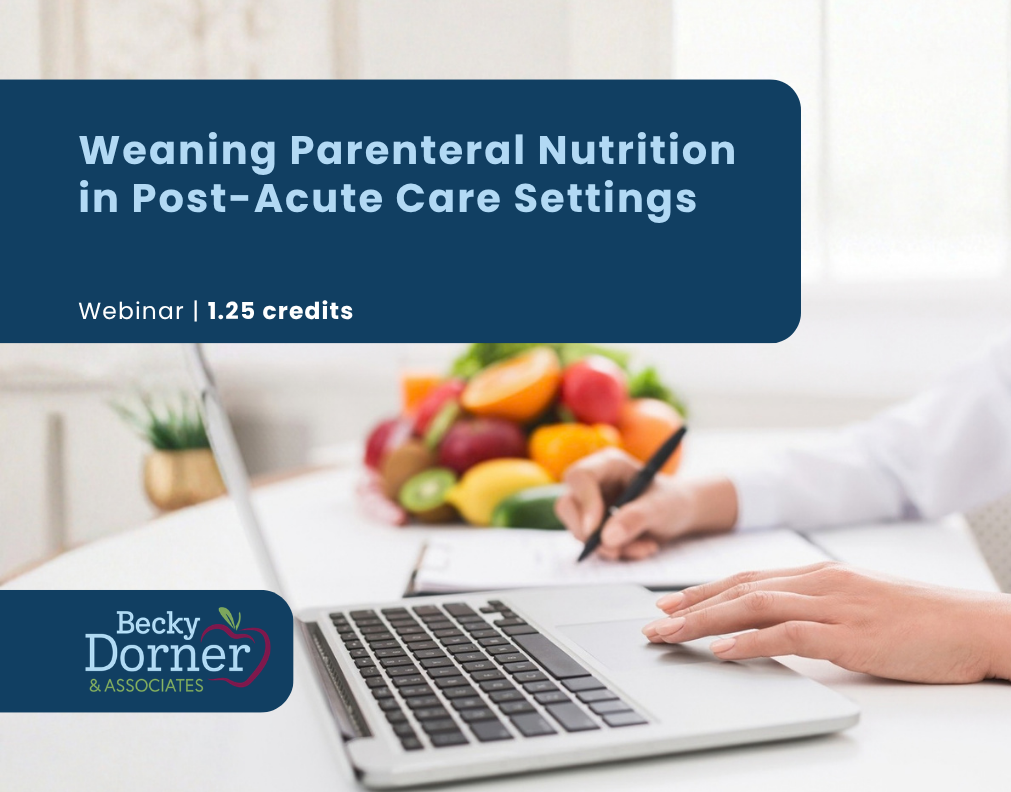
Join nutrition support expert Beth Wall, MS, RDN-AP, CNSC, LDN, for Weaning Parenteral Nutrition in Post-Acute Care Settings. Explore practical strategies for transitioning patients off PN, monitoring their response, and navigating common clinical challenges.
Expand Your PN Knowledge and Earn Continuing Education Credits
Looking for more comprehensive PN education? Explore our Guidelines and Case Studies for Parenteral Nutrition, 3rd Edition self-study course.
Earn 10.75 CPEs while strengthening your understanding of PN indications, vascular access, nutrient formulations, initiation and advancement, monitoring, complications, and PN management across care settings. Case studies help connect evidence-based principles to clinical practice.
Explore the Parenteral Nutrition Course →
References
- Allan, P., & Lal, S. (2018). Intestinal failure: a review. F1000Research, 7(F1000 Faculty Rev):85. https://doi.org/10.12688/f1000research.12493.1
- Nightingale, J.M.D. (2022). How to manage a high-output stoma. Frontline Gastroenterology. 13(2):140–151. https://doi.org/10.1136/flgastro-2018-101108
- DiBaise, J.K., Matarese, L.E., Messing, B., Steiger, E. (2006). Strategies for parenteral nutrition weaning in adult patients with short bowel syndrome. Journal of Clinical Gastroenterology. 40(Suppl 2):S94–S98.
- Pironi L, Cuerda C, Jeppesen PB, et al. ESPEN guideline on chronic intestinal failure in adults: Update 2023. Clinical Nutrition. 2023;42(10):1940–2021. https://doi.org/10.1016/j.clnu.2023.07.019
- Worthington P, Balint J, Bechtold M, et al. When Is Parenteral Nutrition Appropriate? JPEN J Parenter Enteral Nutr. 2017;41(3):324–377. https://doi.org/10.1177/0148607117695251













Connect With Us