


Key Points:
- Does menopause cause weight gain? Not exactly. Weight commonly increases in midlife, with reduced physical activity and muscle loss. Hormone changes and menopausal symptoms also impact metabolic health. Menopause appears to have a more distinct effect on body composition, accelerating fat gain and lean mass loss and shifting fat toward the abdomen (1–3).
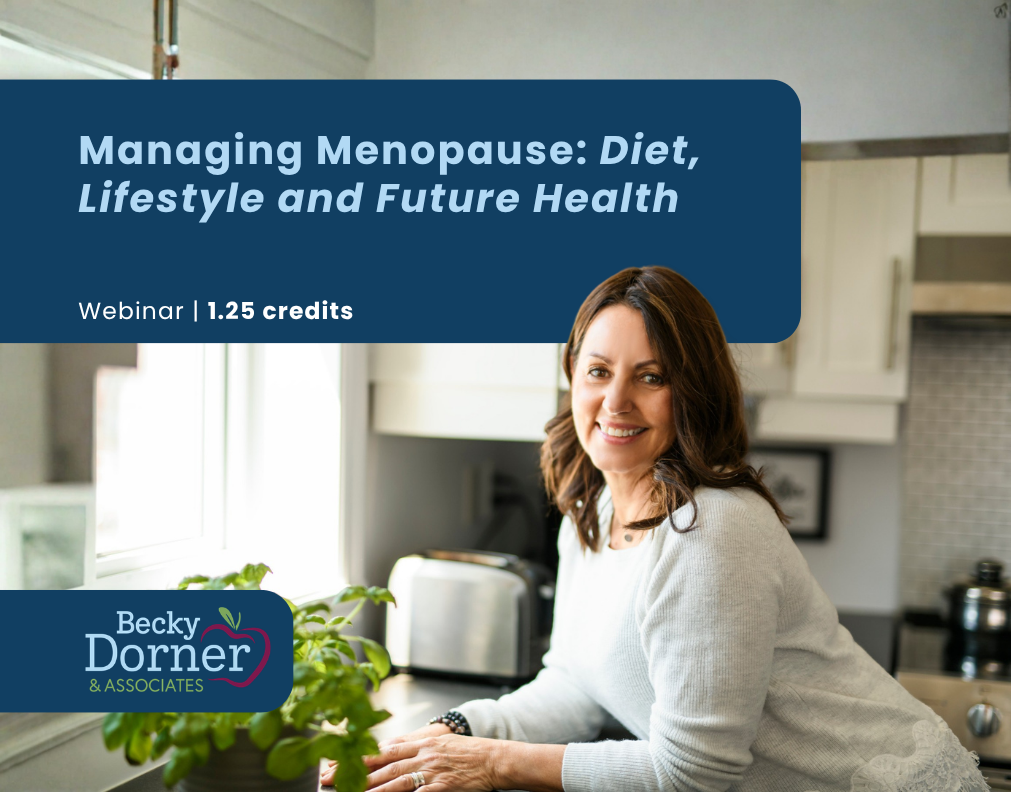
- Earn CPEUs on this topic: Join Hillary Wright, MEd, RDN, LDN, and Elizabeth Ward, MS, RDN, for Managing Menopause: Diet, Lifestyle and Future Health on October 22, 2026, from 2:00-3:00 pm ET.

Does Menopause Cause Weight Gain?
Weight gain is common across midlife, with age related changes in energy expenditure, physical activity, and lifestyle contributing to the trend (1). The menopause transition appears to have a more distinct effect on body composition. In the Study of Women’s Health Across the Nation (SWAN), the rate of fat gain accelerated during the menopause transition while lean mass began to decline (3). These changes continued until approximately two years after the final menstrual period and then leveled off (3). Body weight, however, had already been increasing before the transition and did not accelerate during it (3).
A client-friendly explanation: Aging makes weight gain more likely in midlife. Menopause can change where fat is stored and makes keeping muscle more important.
Why Does Belly Fat Increase During Menopause?
As estrogen declines, fat distribution tends to shift toward the abdomen while lean mass may drop (1–3). Despite little change in weight, a client may lose muscle mass and gain fat and this change can make a difference clinically.
Central adiposity matters because visceral fat is associated with insulin resistance, inflammation, and unfavorable lipids (2). BMI alone may not tell the whole story, so looking at measures such as waist circumference, blood pressure, glucose, lipids, and, when available, body composition can provide a more complete picture of cardiometabolic health (1,2).
Why Can Weight Management Feel Harder During Menopause?
Weight management during menopause is rarely influenced by a single factor. Instead, several physiological and lifestyle changes can occur at the same time, making it important to understand what may be contributing for each individual client.
- Hormones: Declining estrogen is associated with shifts in fat distribution and body composition (1,2).
- Muscle: Lean mass tends to decline with age and may decline more rapidly during the menopause transition. Preserving muscle is important for strength, physical function, metabolic health, and healthy aging. (1, 3).
- Activity: Lower activity in midlife is tied to lean-mass loss and unfavorable body composition changes (1).
- Sleep: Sleep disturbance is common during the transition and can stem from hormonal changes, vasomotor symptoms, and mood symptoms (4). In SWAN, sleep problems accounted for nearly 30% of the association between frequent vasomotor symptoms and weight gain (1).
How clients respond to these changes matters, too. Some may respond to changes in weight or body composition by restricting calories or eliminating whole food groups. Research on disordered eating during the menopause transition is limited and mixed, although one systematic review found restrictive eating patterns may be more common after menopause (7).
Clinical note: Rather than defaulting to eating less, assess whether the client is eating enough to meet protein, micronutrient, and overall nutrition needs while supporting muscle and bone health.
What Should Nutrition Professionals Focus On?
The goal doesn’t have to be returning to a pre-menopause weight or shape. Instead, emphasize behaviors that support health through midlife and beyond.
Prioritize Muscle and Movement
Since lean-mass loss is one of the most modifiable parts of the midlife picture, muscle is a good place to start the conversation. The strongest evidence is for exercise. A 2023 meta-analysis of 101 studies involving 5,697 postmenopausal women found that exercise training increased muscle mass while reducing body fat percentage, waist circumference, and visceral fat (5). Aerobic exercise produced greater effects on fat related outcomes, while resistance and combined training were particularly beneficial for muscle related outcomes (5).
Clinical note: Adequate protein complements resistance exercise by supporting muscle maintenance and growth. Protein needs should be individualized based on overall intake, age, health status, physical activity, energy needs, and whether intentional weight loss is occurring (1).
Focus on Overall Diet Quality
There is no single diet recommended for menopause. Instead, nutrition counseling can focus on a sustainable, nutrient dense eating pattern that supports muscle, bone, and cardiometabolic health. This may include adequate high-quality protein, plant foods rich in fiber, and healthful fats while limiting refined carbohydrates, excess sodium, and saturated fat.
Mediterranean style eating is one dietary pattern that has been studied in menopausal women. A 2024 systematic review of seven interventional studies found potential benefits for weight, blood pressure, triglycerides, total cholesterol, and LDL cholesterol, although the limited number of studies prevents firm conclusions (6).
Clinical note: Rather than focusing primarily on foods to eliminate, help clients identify nutrient rich foods they can add more often. Vegetables, fruits, whole grains, legumes, nuts, seeds, and appropriate protein sources can help improve overall diet quality while supporting individualized nutrition goals.
Consider the Whole Patient
Nutrition care during menopause extends beyond food choices and physical activity. Sleep, stress, bone health, muscle function, menopausal symptoms, food access, and a client’s relationship with food can all influence nutrition needs, health goals, and the ability to make sustainable changes.
Menopausal symptoms are particularly important to consider. Hot flashes and night sweats can disrupt sleep, while fatigue and mood changes may make meal planning, physical activity, and other health behaviors more challenging (1,4). Asking about these factors can help identify barriers that may otherwise be overlooked and allow nutrition recommendations to be tailored to what is realistic for each client.
Clinical note: For nutrition professionals, the goal is to understand the broader context in which eating and activity occur. Addressing nutrition alongside symptoms, sleep, physical activity, and other health priorities can support a more individualized and sustainable approach to care.
Should Weight Loss Always Be the Goal?
Not necessarily. For some clients, intentional weight loss may be clinically appropriate. For others, maintaining weight while preserving muscle and strength, improving dietary quality, increasing physical activity, and reducing cardiometabolic risk may be more appropriate goals.
Clinical note: Try shifting the conversation from “How do I stop menopause weight gain?” to “How can I support my health and body composition as my body changes?”
The Bottom Line for Nutrition Professionals
Menopause-related changes are about more than weight. Fat shifts toward the abdomen, lean mass can decline, and sleep, stress, and activity all interact. That gives nutrition professionals an opening to move the conversation beyond the scale: preserve muscle, support cardiometabolic and bone health, and build strategies clients can continue long term.
Continue Learning About Menopause Nutrition
Join Hillary Wright, MEd, RDN, LDN, and Elizabeth Ward, MS, RDN, for Managing Menopause: Diet, Lifestyle and Future Health on October 22, 2026, to explore practical, evidence-based strategies for supporting clients through menopause.
- Register for the Webinar → https://www.beckydorner.com/product/managing-menopause-diet-lifestyle-and-future-health/
Looking for a deeper dive? Earn 21.75 CPEUs with our Healthy Diet for Menopause self-study course.
- Explore the Course → https://www.beckydorner.com/product/menopause-diet-plan-self-study-course/
FAQ
Does menopause slow metabolism? Resting energy expenditure declines with age, mostly in step with lean-mass loss. Preserving muscle through resistance training and adequate protein helps protect it (1).
What exercise is best for menopausal weight gain? A combination. Aerobic training helps most with fat outcomes and resistance training with muscle outcomes (5).
Is there a best diet for menopause? No single diet has been shown to be best. A nutrient-dense, plant-rich pattern, such as Mediterranean-style eating, is well-supported by the evidence so it is a good place to start, though research in menopausal women is still limited (6).
References
- Hurtado MD, Saadedine M, Kapoor E, Shufelt CL, Faubion SS. Weight gain in midlife women. Current Obesity Reports. 2024;13(2):352–363. doi:10.1007/s13679-024-00555-2.
- Kodoth V, Scaccia S, Aggarwal B. Adverse changes in body composition during the menopausal transition and relation to cardiovascular risk: a contemporary review. Women’s Health Reports. 2022;3(1):573–581. doi:10.1089/whr.2021.0119.
- Greendale GA, Sternfeld B, Huang M, Han W, Karvonen Gutierrez C, Ruppert K, et al. Changes in body composition and weight during the menopause transition. JCI Insight. 2019;4(5). doi:10.1172/jci.insight.124865.
- Maki PM, Panay N, Simon JA. Sleep disturbance associated with the menopause. Menopause. 2024;31(8):724–733. doi:10.1097/GME.0000000000002386.
- Khalafi M, Habibi Maleki A, Sakhaei MH, Rosenkranz SK, Pourvaghar MJ, Ehsanifar M, et al. The effects of exercise training on body composition in postmenopausal women: a systematic review and meta analysis. Frontiers in Endocrinology. 2023;14:1183765. doi:10.3389/fendo.2023.1183765.
- Gonçalves C, Moreira H, Santos R. Systematic review of Mediterranean diet interventions in menopausal women. AIMS Public Health. 2024;11(1):110–129. doi:10.3934/publichealth.2024005.
- Vincent C, Bodnaruc AM, Prud’homme D, Guenette J, Giroux I. Disordered eating behaviours during the menopausal transition: a systematic review. Applied Physiology, Nutrition, and Metabolism. 2024;49(10):1286–1308. doi:10.1139/apnm-2023-0623.









Connect With Us