


Many patients cannot meet their nutritional needs through standard meals alone. Fortified foods provide a practical, food-first strategy to improve intake without increasing volume.
What are fortified foods?
Fortified foods are everyday foods that have been enhanced with additional calories, protein, and/or nutrients to help individuals meet their nutritional needs.
For patients who struggle with poor appetite, unintended weight loss, or low intake, fortified foods offer a practical way to improve nutrition without requiring larger portions.
Why are fortified foods important in clinical practice?
Fortified foods play a critical role in clinical nutrition because many patients are unable to consume sufficient quantities of food to meet their energy and protein needs. This is particularly common among older adults, long-term care residents, individuals recovering from illness or surgery, and those experiencing decreased appetite or fatigue. In these situations, the clinical focus shifts to increasing nutrient density—effectively “getting more from every bite.” By strategically enhancing foods, clinicians can increase calorie and protein intake, support weight maintenance or gain, improve overall nutritional status, and enhance meal acceptance.
When should you consider using fortified foods?
Fortified foods are especially appropriate for people who consume small portions, leave meals unfinished, experience early satiety, or have increased calorie and protein requirements. They are also a key intervention for individuals at risk for or experiencing malnutrition or unintended weight loss. Rather than relying immediately on oral nutritional supplements, many clinicians implement a food-first approach by modifying foods and beverages the individual already enjoys, thereby improving both intake and adherence.
What are common strategies for fortifying foods?
Several strategies can be used to increase the nutrient density of foods without increasing volume. A primary approach involves incorporating calorie-dense ingredients. The addition of nut butters, high calorie spreads, and other energy-dense components can substantially increase caloric intake with minimal impact on portion size.
Protein enhancement is another critical strategy, particularly for individuals with elevated needs related to illness, recovery, or aging. This can be achieved by integrating protein-rich foods into meals, modifying recipes with protein-enhancing ingredients, and prioritizing food-first approaches before introducing oral nutritional supplements.
Equally important is the modification of familiar foods rather than altering established eating patterns. Utilizing commonly accepted foods—such as cereals, soups, and desserts—and adjusting their composition to increase nutrient density supports both intake and adherence. This patient-centered approach aligns with best practices in clinical nutrition by optimizing acceptance while improving overall nutritional adequacy.
What role do oral nutritional supplements play?
Oral nutritional supplements and protein powders can be helpful—but they are typically not the first step. “Food first” is the motto of most registered dietitian nutritionists when it comes to boosting nutrient intake.
They are most effective when:
- Food-based strategies are insufficient
- Intake remains low despite interventions
- Protein needs are significantly elevated
Even then, they often work best in combination with fortified foods, not as a replacement for familiar foods.
Why fortified foods work so well
Fortified foods align with a key clinical reality that patients are more likely to consistently consume foods they enjoy. By enhancing these preferred foods rather than replacing them, clinicians can improve overall nutritional intake without overwhelming patients. This approach also helps reduce reliance on oral nutritional supplements while supporting more sustainable, patient-centered nutrition interventions.
The challenge: knowing exactly how to implement it
While the concept of food fortification is simple, implementation is where many clinicians struggle:
- Which ingredients can be added to foods to increase calories and protein without increasing volume?
- How can simple strategies—such as fortified milk or enhanced recipes—be incorporated into daily meals?
- What are examples of fortified recipes that are well accepted by patients?
- How can meals and snacks be structured to support higher calorie and protein intake throughout the day?
That’s where having structured, ready-to-use guidance becomes essential.
Get the complete practical guide
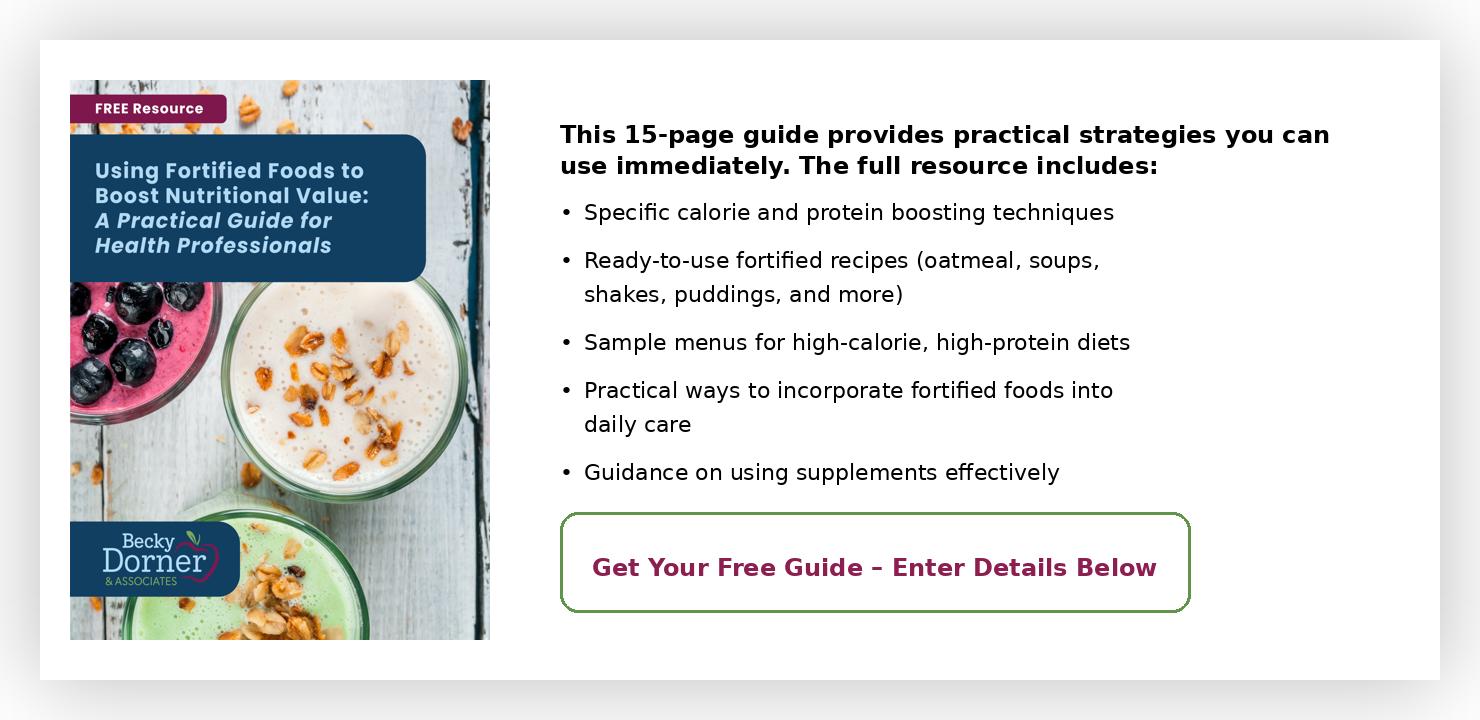
2026 Using Fortified Foods to Boost Nutritional Value
Thank you for your interest in our free fortified foods resource! After providing your name and email address, you will receive an email with a direct link to download the 15-page PDF.
By submitting your information, you agree to our terms and conditions and are subscribing to receive helpful updates and insights via our newsletter.















Connect With Us