


F812, 483.60(i) Food Safety Requirements – Procure, store, prepare, distribute, and serve food in accordance with professional standards for food safety – continues to rank among the most frequent survey citations in long-term care (LTC) facilities nationwide (1).
For registered dietitian nutritionists (RDNs), nutrition and dietetics technicians, registered (NDTRs), certified dietary managers (CDMs), and foodservice professionals working in LTC, this is not surprising. F812 spans the entire food flow process – from procurement and receiving to storage, preparation, cooking, cooling, reheating, holding, and service, as well as sanitary requirements. Because of its broad scope, even small operational breakdowns can result in survey deficiencies.
Integrating F812 requirements into daily food handling protocols is fundamental to reducing food contamination risk and safeguarding resident health outcomes.
What Is F812?
F812 requires facilities to:
- procure food from approved sources.
- store, prepare, distribute, and serve food under sanitary conditions for food safety.
- maintain proper temperature controls.
- prevent contamination.
This regulation is designed to require comprehensive food safety oversight at every stage of food handling to reduce contamination risk and safeguard residents’ health. The Centers for Medicare & Medicaid Services (CMS), State Operations Manual: Appendix PP includes many details for surveyors to use in assessing whether or not a facility is compliant with this requirement.
Why Is F812 So Frequently Cited?
F812 is frequently cited because it encompasses nearly every stage of foodservice operations. Its breadth makes compliance operationally complex and highly visible during survey observations.
Any lapse along the way — such as improper date marking, inadequate cooling methods, or failure to maintain hot and cold holding temperatures — can result in deficiencies. While many facilities maintain compliant written policies, inconsistent implementation creates vulnerability.
Common contributing factors include:
- High staff turnover and/or understaffing
- Inadequate onboarding processes
- Insufficient competency validation
- Production pressures
- Limited supervisory oversight
In many cases, the issue is not knowledge deficit, but system failure and weak accountability structures. Without reliable monitoring systems and real-time corrective action, food safety practices can drift from policy to inconsistency.
Common Deficiency Findings Under F812
While citations vary, surveyors frequently identify issues such as:
- Deficiencies in cleaning and sanitizing such as unsanitary food contact surfaces, and/or improper dishwashing
- Cross-contamination between raw and ready-to-eat foods
- Poor hand hygiene or glove misuse
- Improper hot or cold holding temperatures
- Inadequate cooling (failure to meet time/temperature standards)
- Improper reheating practices
- Missing or inaccurate labeling and date marking
- Ice machine contamination
Cooling and reheating violations are especially common triggers for citation due to the high risk of bacterial growth within the temperature danger zone (41°F–135°F). For residents in LTC who are medically vulnerable or immunocompromised, even a single lapse in temperature control can have the potential for serious clinical consequences.
What Surveyors Look For During an F812 Review
An F812 review centers on direct observation of practice. Surveyors routinely observe meal preparation, tray line, and meal service to evaluate sanitation and temperature control in real time.
Observations may include taking internal food temperatures to verify safe holding practices, checking refrigerator and freezer ambient temperatures, reviewing temperature logs for accuracy and consistency, inspecting dry storage areas and refrigeration/freezer units for proper storage using (FIFO) first-in, first-out, labeling, dating, and separation of raw and ready-to-eat foods. Hand hygiene, glove use, and cross-contamination prevention practices are also closely observed. Food and nutrition services staff may be interviewed to assess understanding of:
- the temperature danger zone (41°F–135°F)
- how to take an accurate food temperature
- cooling and reheating procedures
- proper use of gloves, and/or
- corrective action protocols.
Cleaning and sanitizing procedures, including sanitizer concentrations and dish machine temperatures, are closely evaluated.
In addition to direct observation, surveyors compare observed practices to documentation. Discrepancies between logs and real-time observation often raise compliance concerns.
The Role of RDNs, NDTRs, and CDMs in Preventing F812 Citations
Although F812 centers on operational food safety, nutrition leaders play a critical role in regulatory compliance.
Effective strategies include:
- Developing structured monitoring systems rather than relying solely on written policies.
- Implementing competency-based training with return demonstrations and ongoing education to reinforce food safety procedures.
- Conducting routine mock surveys and internal audits.
- Reinforcing cooling and reheating protocols.
- Integrating food safety metrics into quality assurance/performance indicator (QAPI) programs.
- Ensuring corrective actions are documented and completed.
Leadership presence, supervision, and corrective action in the kitchen during peak production times is one of the most effective risk-reduction strategies.
Turning Compliance Into Culture
Sustained compliance with F812 requires more than written policies and completed logs, it requires an embedded culture of food safety.
Facilities that consistently avoid F812 citations demonstrate:
- Strong supervisory presence
- Immediate corrective action of unsafe practices
- Routine internal audits that mirror surveyor methodology
- Structured orientation and annual competency validation
- Ongoing food safety training and review
- Clear accountability and documented follow-through
Food safety expectations must be reinforced continuously, not addressed only during survey preparation.
When food safety is framed as resident protection rather than regulatory burden, staff engagement improves. A culture of compliance develops when safe practices are normalized, monitored, and consistently reinforced at every level of the organization.
Key Takeaway
F812 remains one of the most frequently cited F-tags because it touches every aspect of foodservice operations in long-term care. However, deficiencies are preventable when facilities move beyond reactive compliance and build proactive, system-based food safety programs.
For RDNs, NDTRs, CDMs, and foodservice leaders, food safety excellence is not merely a regulatory mandate but a defining measure of professional practice. Consistent, evidence-based food handling practices protect vulnerable residents, reduce survey citation risk, and demonstrate the overall quality and integrity of nutrition services within the facility.
Strengthen Your Survey Readiness and Staff Competency
Proactive compliance requires regulatory knowledge, solid policies and procedures, and well-trained staff.
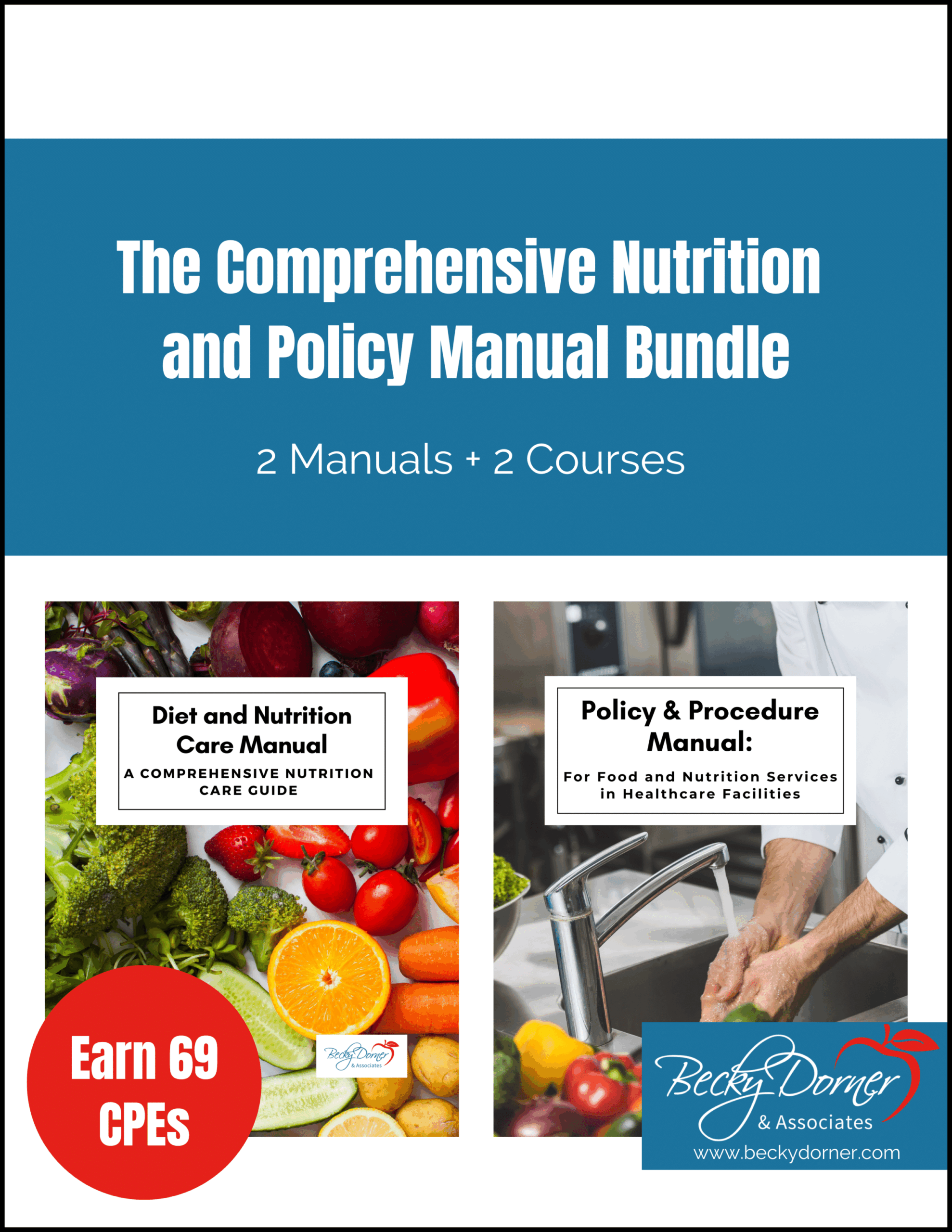
Our Policy & Procedure Manual covers all the essentials for a well-run food and nutrition services department.
Our Long-Term Care and Regulatory Readiness Bundle equips food and nutrition service professionals with courses based on essential resources, including:
- Food Code 2022
- CMS State Operations Manual, Appendix PP – Guidance to Surveyors for LTC Facilities
- MDS 3.0 RAI Manual
For practical guidance on maintaining compliance year-round, the Survey Ready 24/7/365: Regulatory Compliance Strategies for Food & Nutrition Services webinar provides actionable strategies to help teams prepare for surveys and sustain regulatory readiness.
To further strengthen leadership and decision-making skills, the Foodservice Management Concepts: Case Studies for Food and Nutrition Professionals course provides practical, real-world scenarios that build critical thinking around communication, operational systems, and quality assurance.
At the staff level, the Inservice Education Manual for Food and Nutrition Services in Healthcare Facilities provides ready-to-use training materials designed specifically for healthcare foodservice teams, supporting ongoing competency and strengthening your food safety culture.
Explore these today and position your team for survey success.
References:
- Center for Medicare & Medicaid Services. State Operations Manual Appendix PP – Guidance to Surveyors for Long Term Care Facilities. (Rev. 232; Issued: 7-23-25). Available at https://www.cms.gov/Regulations-and-Guidance/Guidance/Manuals/downloads/som107ap_pp_guidelines_ltcf.pdf. Accessed February 23, 2026.
- Elizaitis, B. (2025). Top 10 most frequently cited Ftags. CMS Compliance Group, Inc.

















Connect With Us