Dietary Approaches for Optimizing Cardiovascular Health
Janice Baker, RDN, CDCES, CNSC, BC-ADM
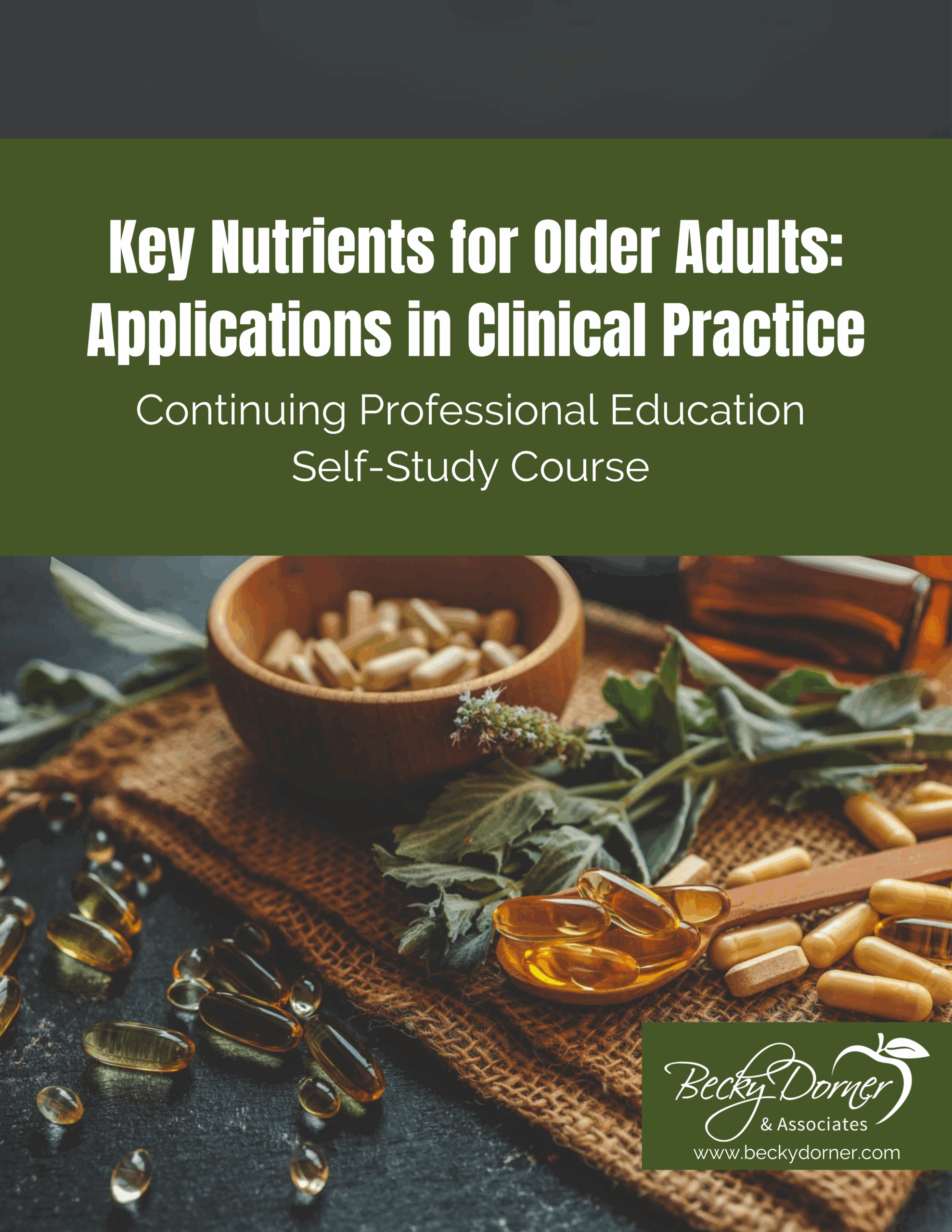
Key Nutrients for Older Adults: Applications in Clinical Practice

Purchase this Product
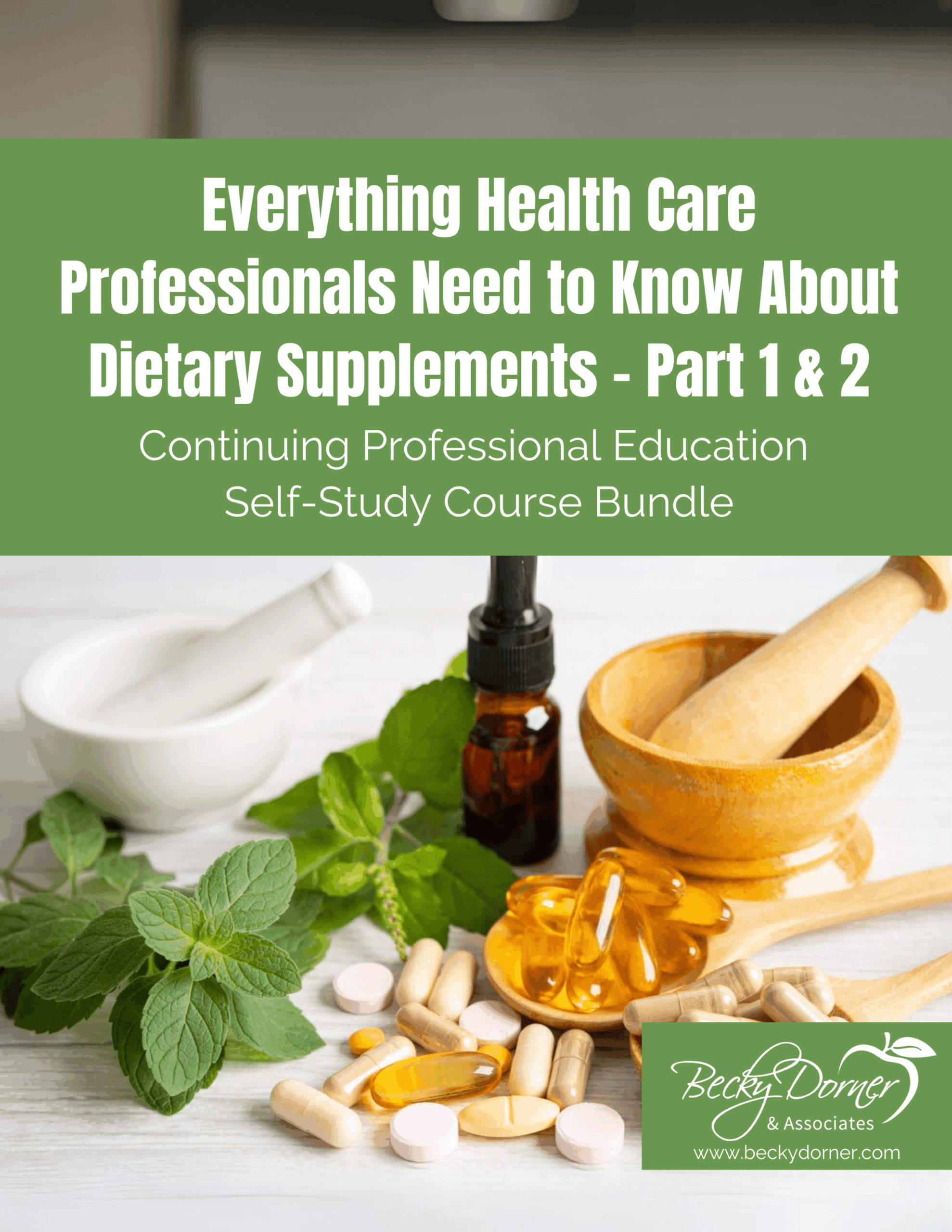
Learn how to apply evidence-based research on vitamins and other dietary supplements, including recommended intake levels and potential risks for deficiencies!
The required reading for this course is intended to serve as a guide for health care professionals on the available evidence on the sources of, recommended intake levels for, and potential risks for deficiencies of a range of vitamins, and other dietary supplements. This particular course focuses on Vitamin B12, Vitamin B6, Vitamin D, Calcium, Magnesium, and Omega 3 Fatty Acids.
This is a useful reference for registered dietitian nutritionists and nutrition and dietetic technicians, registered. The case-study based continuing professional education exam focuses on specific aspects of the fact sheets and helps the learner apply the information to their work setting.
Course includes eDocument (including a link to the required reading in the course document), PDF copy of the fact sheets in this course, electronic test and 1 certificate with passing grade.

After completion of this CPE program, the participants will be able to:
- Interpret and apply evidence-based literature and standards for dietary supplements to support nutritional needs of target audiences.
- Integrate new knowledge and skills related to micronutrients for digestion, absorption, and metabolism throughout the lifespan in practice.
- Demonstrate knowledge of nutrient requirements throughout the lifespan, and their role in health promotion and disease prevention.
- Collect information related to client/patient use of dietary supplements to identify potential drug and nutrient interactions.
This course is intended for: RDNs and NDTRs
Key Nutrients for Older Adults: Applications in Clinical Practice awards 9.5 CPEUs in accordance with the Commission on Dietetic Registration CPEU Approval.
CDR Activity Number: 190006 Self Study Activity Type: 741 Enduring
CDR Course Level: II
Suggested CDR Performance Indicators:
- 9.1.1. Interprets and applies evidence-based literature and standards for determining nutritional needs of target audiences.
- 9.1.4 Integrates knowledge of macro- and micronutrients for digestion, absorption, and metabolism throughout the lifespan in practice.
- 9.1.5 Demonstrates knowledge of nutrient requirements throughout the lifespan, and their role in health promotion and disease prevention.
- 11.2.3 Collects information related to client/patient use of medications, dietary supplements and integrative and functional medicines to identify potential adverse drug and nutrient interaction.
Numerous other Performance Indicators may apply.
This self-study course includes required reading, a downloadable course document, fact sheets, and an online exam with multiple choice, case study based questions. Upon passing the test, the learner can download and print the certificate.
Required Reading for this Course: National Institutes of Health, Office of Dietary Supplements, Fact Sheets for Health Professionals (a link to the resources and a PDF of the fact sheets for this course are included in the downloadable course document).
Disclaimer: The text associated with this course is required solely for the course taker to learn the underlying principles that will be applied in taking a case-study based exam. Neither the authors nor the publishers of the text/book have contributed to or endorsed this course.
Praise for Becky Dorner & Associates
Medical Nutrition Therapy for Cancer Prevention and Treatment Course
Aimee Shea, MPH, RDN, CCMS, LD
GLP-1 Therapy for Patients with Obesity: Identifying Solutions to Optimize Nutrition
Aimee Shea, MPH, RDN, CCMS, LD
State Operations Manual Appendix PP- Guidance to Surveyors for Long Term Care Facilities Course
Lori Stevens, RD, LDN
Time-Restricted Eating, Energy Intake, and Dietary Quality Self-Study course
Amy Hess-Fischl, RDN, CDCES
The Pesco-Mediterranean Dietary Pattern Combined with Intermittent Fasting for Optimizing Cardiovascular Health Short Course
Janice Baker, MBA, RDN, CDCES, CNSC, BCADM