Food-shaping is often overlooked in aged care facilities. Many facilities could easily adapt several food-shaping techniques that are discussed in this short course to improve the nutrition outcomes of their older adults with dysphagia.
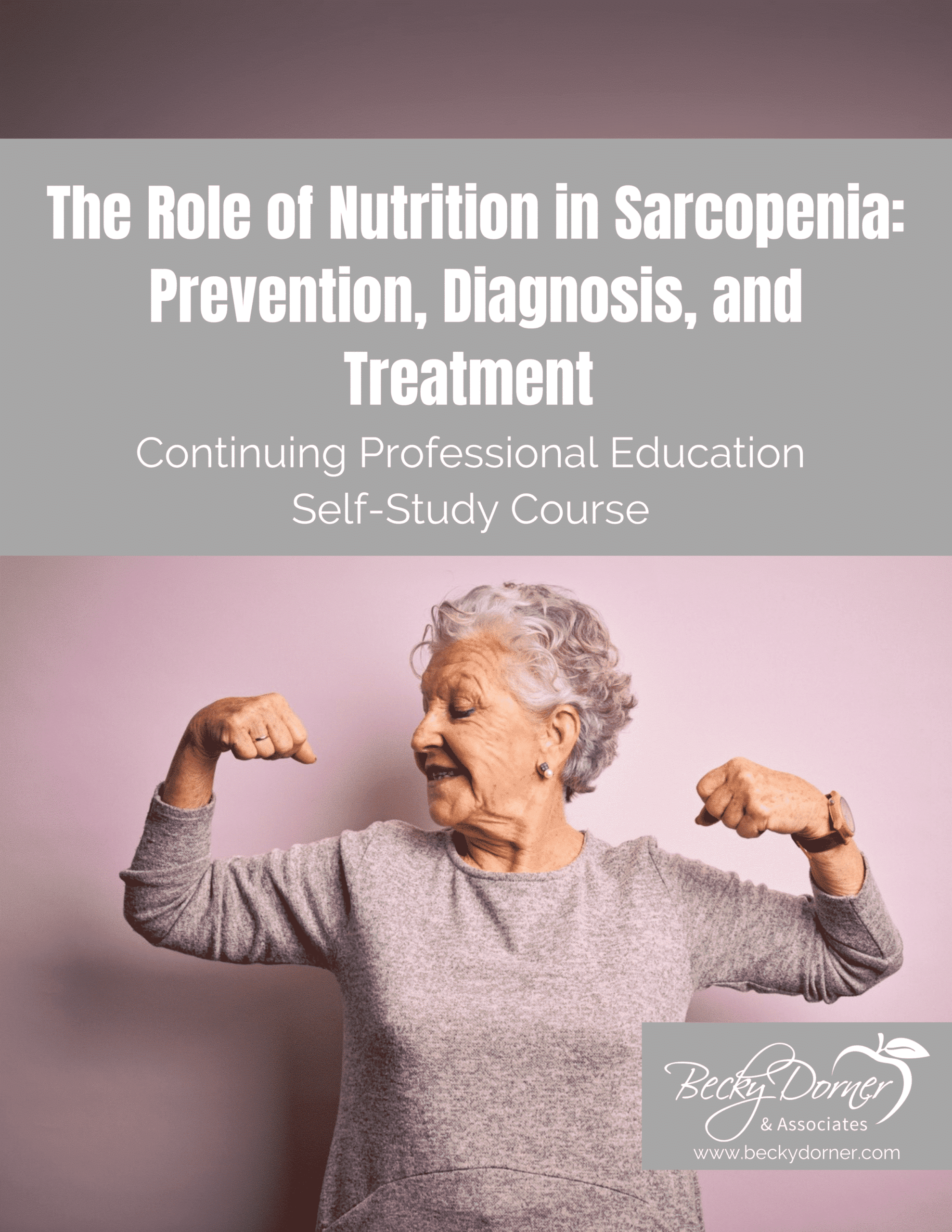
The Role of Nutrition in Sarcopenia: Diagnosis, Prevention and Treatment

Purchase this Product
Learn how to integrate evidence-based research for nutrition screening/interventions/prescriptions for sarcopenia in older adults!
Course Description
Sarcopenia, the loss of skeletal muscle mass and impaired muscle function in older adults, leads to poor health outcomes and significant economic costs. Evidence gaps remain regarding nutrition’s role in prevention, with prevalence varying based on living status, demographics, and diagnostic methods.
This course’s required reading explores diagnostic criteria and assessment methods for sarcopenia, along with a review of observational data and intervention studies on diet and nutrition as preventive strategies for adults aged 60–70.
This course is appropriate for registered dietitian nutritionists (RDNs), certified diabetes counseling and education specialists (CDCESs), and nutrition and dietetic technicians, registered (NDTRs) that are employed in health care settings including assisted living, independent living, skilled nursing and home health.
A case-study based CPE examination helps the reader apply information in the course to their work setting and patient population.
Purchasing Options: This is available as eDocument plus CPE Test only. Includes a link to the required reading in the course document, electronic test, and 1 certificate with passing grade.

After completion of this CPE program, the participants will be able to:
- Interpret and integrate evidence-based research and literature in decision making regarding treatment of sarcopenia.
- Conduct nutrition screening using standardized, validated tools to identify client/patient risks and levels of criticality.
- Select interventions intended to resolve or improve sarcopenia.
- Develop nutrition prescriptions to communicate clients’/patients’/customized diet and nutrition needs for treatment of sarcopenia.
This course is intended for: RDNs and NDTRs
The Role of Nutrition in Sarcopenia: Diagnosis, Prevention and Treatment Course awards 3.75 CPEUs in accordance with the Commission on Dietetic Registration CPEU Approval.
CDR Activity Number: 186771 Self Study Activity Type: 741 Enduring Activity
CPE Level: II
Suggested CDR Performance Indicators:
-
-
- 5.1.2 Interprets and integrates evidence-based research and literature in decision making.
- 9.2.3 Analyzes new information and how it impacts medical nutrition therapy
- 11.1.2 Conducts nutrition screening using standardized, validated tools to identify client/patient risks and levels of criticality.
- 11.3.6 Develops nutrition prescriptions to communicate clients’/patients’/ customized diet and nutrition needs.
-
Note: Numerous other Performance Indicators may apply.
This self-study course includes required reading, a downloadable course document and an online exam with multiple choice questions. Upon passing the test, the learner can download and print the certificate.
Required Reading for this Course: Diagnostic Criteria and Measurements Techniques of Sarcopenia: A Critical Evaluation of the Up-to-Date Evidence and The role of nutrition in the prevention of sarcopenia (a link to the articles is included in the downloadable course document).
Disclaimer: The text associated with this course is required solely for the course taker to learn the underlying principles that will be applied in taking a case-study based exam. Neither the authors nor the publishers of the text/book have contributed to or endorsed this course.
Praise for Becky Dorner & Associates
How Food Shaping Impacts Nutrition in Older Adults- Short Course
Jamie Smith, MS, RD, LDN
Minimum Data Set (MDS) 3.0 RAI Manual v1.17 Course
Erin Allen, MS, RDN, LD
A Dietitian’s Guide to Medications for Patients with Diabetes 12th Edition Self-Study Course
Casey Seiden, MS, RDN, CDN, CDE
Guidelines for Clinical Nutrition Care: Essential Information for Nutrition Professionals
Ethics Isn’t Optional: Understanding and Applying the Academy of Nutrition and Dietetics Code of Ethics-2nd Edition
Lisa Dierks, MFCS, RDN
Justifying the Need for Quality Measures and Nutrition-Focused Quality Improvement Programs in Skilled Nursing Facilities
Elizabeth Reynolds, RDN, LD