
This continuing education program is valuable for dietitians because it links dementia prevention with nutrition and lifestyle. The course explores how cultural and socioeconomic factors influence access to healthy foods and preventive care, supporting more inclusive and equitable nutrition practices.
NEW!
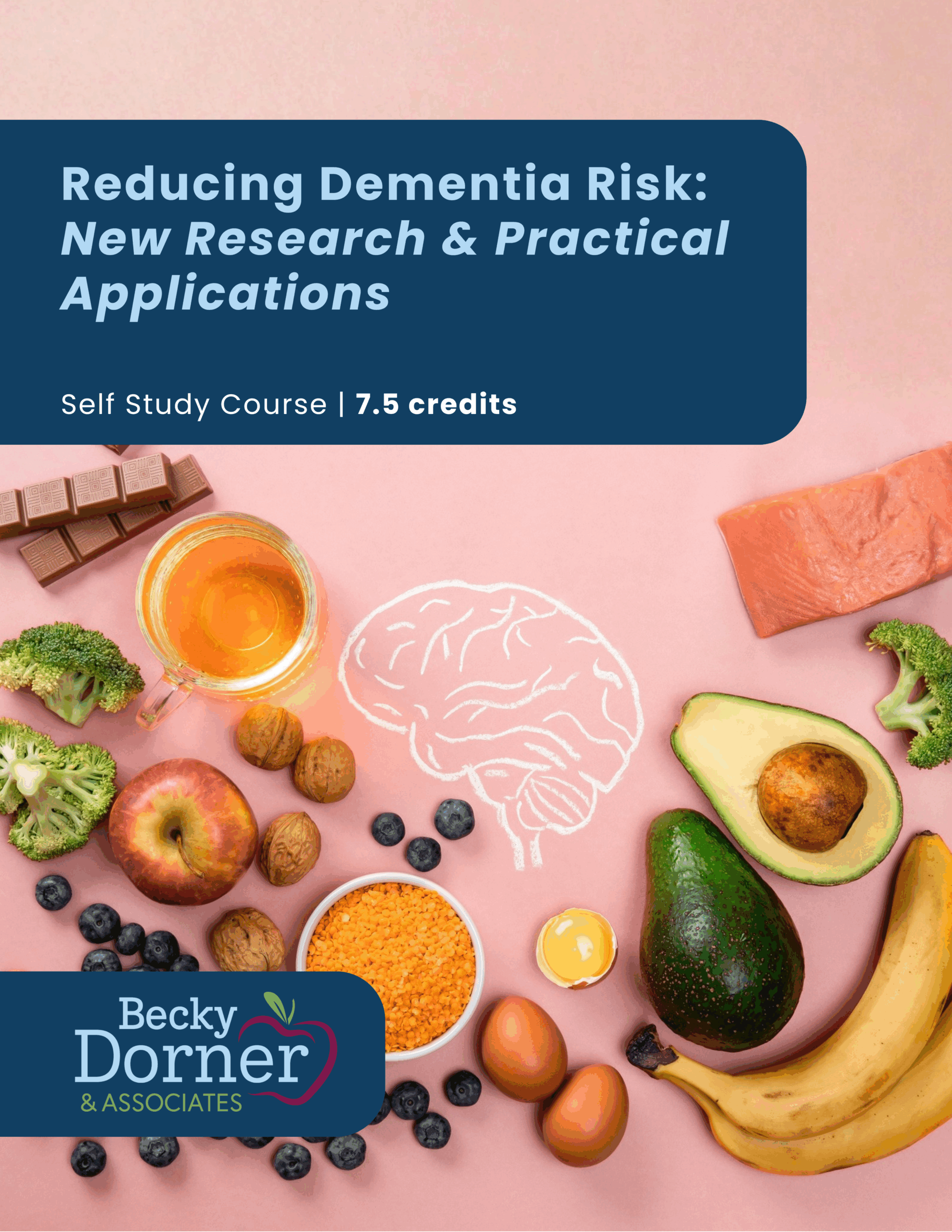
Reducing Dementia Risk: New Research & Practical Applications

Course Expires January 23, 2029
Credits: 7.5 CPE
Profession:
RDN/NDTR
Required Reading 1
Purchase this Product
Gain insights on how to apply evidence-based research for risk reduction for dementia.
This course provides encouraging evidence on how prevention, intervention, and care can reduce the risk of dementia. Highlights include the fact that aging populations are increasing worldwide, and the number of new dementia cases can be lowered by addressing key modifiable factors such as hearing loss, hypertension, obesity, depression, physical inactivity, diabetes, smoking, and air pollution.
The required reading notes that improving early education, maintaining a healthy lifestyle, and reducing social isolation may help support brain health. It also recognizes that cultural factors, resource availability, and socioeconomic conditions can influence access to prevention and care. The findings suggest that implementing inclusive and equitable public health strategies could help prevent or delay up to 50% of dementia cases.
This course is essential for health professionals because it:
- Applies the latest global research to real-world care.
Highlights 14 modifiable risk factors (such as hypertension, obesity, hearing loss, diabetes, and social isolation) that together could prevent or delay up to approximately half of dementia cases. - Supports interprofessional practice.
Dementia prevention and management involves physicians, dietitians, nurses, therapists, and social workers. The course emphasizes team-based approaches to risk reduction, early intervention, and holistic patient support. - Promotes early identification and patient education.
Health professionals learn how to screen for dementia risk factors during routine care and counsel patients on lifestyle changes that promote brain health. - Improves population health outcomes.
By addressing modifiable risks—like physical inactivity, smoking, poor diet, and social isolation—participants can help reduce dementia incidence in their patient populations and communities
This course is appropriate for registered dietitian nutritionists (RDNs) and nutrition and dietetic technicians, registered (NDTRs) working in various health fields. The case-study based continuing professional education exam reviews key aspects of the required reading and assists the learner with practical application to the content.
Course includes eDocument (including a link to the required reading in the course document), electronic test and 1 certificate with passing grade.
After completion of this CPE program, the participants will be able to:
- Apply new knowledge and skills related to dementia in professional practice.
- Recognize the inequities and health disparities related to the social determinants of health in dementia.
- Interpret and apply evidence-based research and literature to guide recommendations and decision-making related to dementia.
- Utilize established benchmarks and best practices to influence dietary recommendations for individuals with dementia.
This course is intended for: RDNs and NDTRs
Reducing Dementia Risk: New Research & Practical Applications awards 7.50 CPEUs in accordance with the Commission on Dietetic Registration CPEU Approval.
CDR Activity Number: 191356 Self Study Activity Type: 741 Enduring
CDR Course Level: II
Suggested CDR Performance Indicators:
- 1.1.5 Integrates new knowledge and skills into practice.
- 2.33 Recognizes and addresses inequity and health disparities associated with social determinants of health.
- 5.1.2 Interprets and integrates evidence-based research and literature in decision making.
- 8.4.7 Uses accepted benchmarking and best practices to inform practice.
Numerous other Performance Indicators may apply.
This self-study course includes required reading, a downloadable course document, and an online exam with multiple choice, case study based questions. Upon passing the test, the learner can download and print the certificate.
Required Reading for this Course: Dementia prevention, intervention, and care: 2024 report of the Lancet Standing Commission. Lancet. 2024 (a link to the required reading is included in the downloadable course document).
Disclaimer: The text associated with this course is required solely for the course taker to learn the underlying principles that will be applied in taking a case-study based exam. Neither the authors nor the publishers of the text/book have contributed to or endorsed this course.
Praise for Becky Dorner & Associates
This was a very comprehensive and thorough dive into PCOS, which affects so many women currently. The required reading was easy-to-read, enjoyable, and had interesting case studies to follow. The self study course offered challenging questions with quite a few distractors, which…
Managing Polycystic Ovary Syndrome Course
Ashley Sponsky, MS, RD, LDN
Becky Dorner & Associates programs provide in-depth continuing education for nutrition professionals. Their courses cover a wide variety of interesting and pertinent topics that will help practitioners maintain up-to-date knowledge and expertise.
Doreen Rodo, MEd, RDN, LD
This makes an excellent CPE program. It employs a well-designed, robust study to address the association between weight status and mortality in older adults. The questions posed in this CPE program are relevant to understanding the most pertinent information from the study.
Change in Body Size and Mortality Among Healthy Older Adults
Kate Willcutts, DCN, RDN, CNSC, FASPEN
This self-study course and required reading support the evidence of knowledge of the current USDA Food Code. The program provides a comprehensive review and understanding of applying the 2022 Food Code.
Food Code 2022 Course
Marcy Cook, RDN, LD
This would make a great CPE program because this information is utilized on a daily basis when working in the world of dialysis. Much of this information could be utilized inpatient and in ICU settings as well. This program will be very…
Kidney Disease: Comprehensive Nutrition Assessment and Management Course
Lauren Begnel, RD, CSR, LD
It is important (actually vital) for the RDN to understand where the research and science lands on the topic of nutrition and dementia. This self study course was a bit more complicated program than the norm since it was evaluating and understanding…
Nutrition and Dementia Prevention: Limitations of Current Research
Sue Linja, RDN, LD
Related Products
NEW!
Popular Products
✨ BOGO!

Join Our FREE eNewsletter & Create An Account
Get 20% off your first order and receive regular updates and new product announcements! Create an account now.