
Every nutrition professional will likely encounter situations in which end of life care and palliative care decisions will be presented for consideration by the health care team. This crosses all settings including long term care, dialysis, acute care, etc. We each will also be presented with such decision making in our personal lives and can benefit from a better understanding of what makes palliative care unique and worthy of consideration. Every nutrition professional should consider this course at some point in their career.
Nutrition for Patients/Residents in Palliative Care

Purchase this Product
Earn 33 CPEs while learning how to provide nutrition care for patients/residents in palliative care.
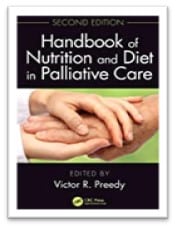
The required reading for this course, Handbook of Nutrition and Diet in Palliative Care, is a comprehensive review of the management of patients who are undergoing palliative care. Written from a global perspective, it includes information relevant to end of life care in all countries and cultures. Topics covered in the required reading include but are not limited to quality of life, cultural and religious aspects of palliative care, cancer cachexia, use of medications and cannabinoids, and palliative care in a variety of situations including cancer, eating disorders, neurological disorders, long term care, dysphagia, and cystic fibrosis.
A case-study based CPE examination helps the reader apply information in the course to their work setting and patient population.
Course includes hard copy book, electronic test and 1 certificate with passing grade.
Already have the book? Under “Product Options” simply choose “CPE Test Only ” to purchase the CPE Self-Study Program.
After completion of this CPE program, participants will be able to:
- Interpret and integrate evidence-based research and literature in decision-making about palliative care.
- Recognize situations where nutrition and dietetics service should be adjusted, limited, modified, or discontinued in patients who are receiving palliative care.
- Integrate knowledge of biological, physical, and social sciences with knowledge of food and nutrition to make decisions related to palliative nutrition care.
This course is intended for: RDNs and NDTRs
CDR Activity Number: 179701 Self Study Activity Type: 720 Printed
CPE Level: 2
Suggested CDR Performance Indicators:
- 4.1.2 Interprets and integrates evidence-based research and literature in decision-making.
- 4.1.6 Recognizes situations where nutrition and dietetics service should be adjusted, limited, modified, or discontinued.
- 8.1.2 Integrates knowledge of biological, physical, and social sciences with knowledge of food and nutrition to make decisions related to nutrition care.
- 10.2.1 Gathers and evaluates information related to behaviors, beliefs, knowledge, and client/patient attitudes that influence nutrition and health.
Note: Numerous other Performance Indicators may apply.
The answer to Test Your Knowledge is “c. Gabapentin.”
This self-study course includes required reading, a downloadable course document and an online exam with multiple choice, case study based questions. Upon passing the test, the learner can download and print the certificate.
Required Reading for this Course: Handbook of Nutrition and Diet in Palliative Care.
Disclaimer: The text associated with this course is required solely for the course taker to learn the underlying principles that will be applied in taking a case-study based exam. Neither the authors nor the publishers of the text/book have contributed to or endorsed this course.
Praise for Becky Dorner & Associates
Blue Zones: Keys to Longevity Course
Janice Baker, RDN, CDCES, CNSC, BCADM
Developing Coaching Skills: A Concise Introduction
Brenda Richardson, MA, RDN, LDN, FAND
Home Nutrition Support, Gastrointestinal & Metabolic Nutrition Care Course
Emma Fogt, MBA, MS, RDN, LDN, FAND
Low-Fat Vegan Diet and Metabolic Health in Overweight Adults
Cassie Christopher, MD, RDN
Developing Leadership and Management Skills in Nutrition and Dietetics
Amy Hess-Fischl, MS, RDN, LDN, BC-ADM, CDCES
Managing Chronic Kidney Disease with the Nutrition Care Process Course
Stacey Phillips, MS, RD